Imbolc, Historical Origins and meaning
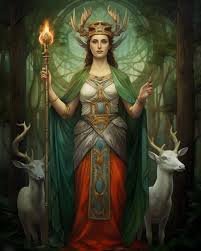
Goddess Brigid
Image by GoddessKindness
Imbolc: Historical Origins, Meaning, and Cultural Context
Imbolc (Old Irish Imbolc, also attested as Imbolg and Oímelc) is one of the four principal seasonal festivals of the early Gaelic world, alongside Samhain, Bealtaine, and Lughnasadh. It is traditionally observed around February 1st, marking the midpoint between the Winter Solstice and the Spring Equinox.
Archaeological, linguistic, and textual evidence suggests that Imbolc originated in pre-Christian Ireland, with parallels in other Celtic regions, though Ireland preserves the richest body of source material.
Etymology and Meaning
The etymology of Imbolc is debated among scholars, but two interpretations are widely accepted:
“In the belly” (i mbolg) — referring to the pregnancy of ewes and the gestation of life not yet visible
“Ewe’s milk” (oí-melc) — emphasizing the return of lactation and sustenance
Both interpretations reflect Imbolc’s central concern: pastoral survival and renewal. This was not a symbolic festival alone; it marked a critical turning point in the agricultural year when food scarcity began to ease and the possibility of endurance became more certain.
Imbolc in the Agricultural Calendar
Early medieval Irish society was heavily pastoral. Cattle and sheep were measures of wealth, status, and survival. The onset of lambing season and the return of milk made Imbolc an essential observance.
Historically, Imbolc functioned as a time to:
Assess winter stores
Bless livestock and homes
Prepare tools and land for spring
Invoke protection for a vulnerable period
Unlike later spring festivals, Imbolc did not celebrate abundance. It acknowledged fragility, uncertainty, and hope grounded in experience.
Brigid as a Pre-Christian Deity
Imbolc is inseparable from Brigid, one of the most prominent figures in Irish mythological tradition. In early sources such as Cormac’s Glossary (9th century), Brigid is described as a triple goddess associated with poetry and inspiration, Healing and sacred wells, Smithcraft and fire.
These domains reflect both domestic and liminal power—the hearth fire, the forge, and the well as centers of transformation. Brigid’s association with Imbolc suggests her role as a guardian of thresholds: winter to spring, scarcity to sustenance, darkness to light.
Christianization and Cultural Continuity
With the Christianization of Ireland (5th–7th centuries), Imbolc was not eliminated but recontextualized. Brigid was transformed into Saint Brigid of Kildare, whose feast day falls on February 1st. Candlemas, celebrated on February 2nd, mirrors Imbolc’s themes of purification and returning light.
This continuity allowed many folk customs to persist, including:
Candle blessings
Hearth rituals
Weaving of Brigid’s crosses
Household protections for the year ahead
Rather than representing a clean break, Imbolc illustrates religious syncretism and cultural resilience.
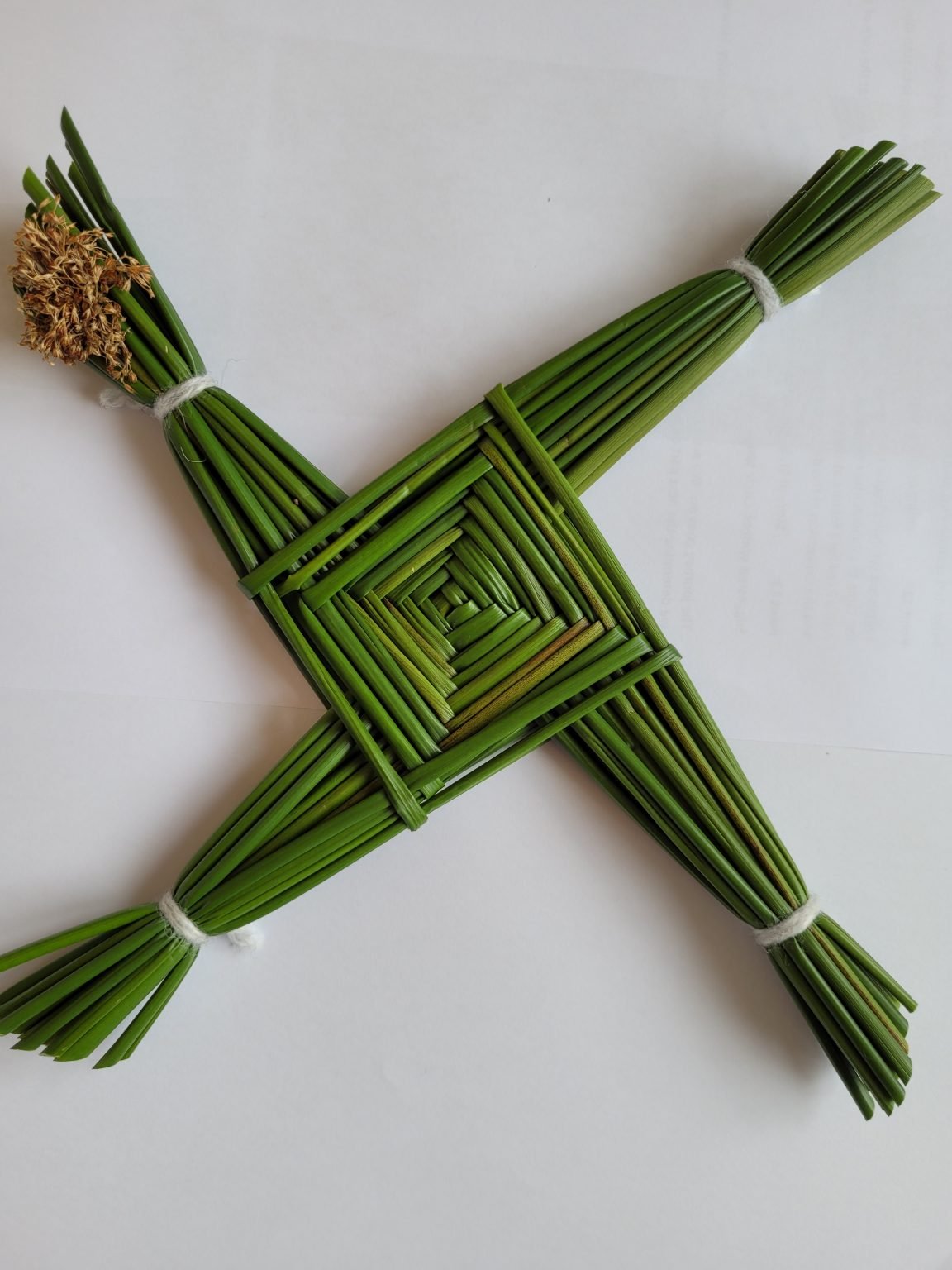
Brigid’s cross from Weaving of a St. Brigid’s Cross, learn how and history of this tradition
A Historically Inspired Imbolc Meditation & Ritual
This practice is not a reconstruction, but a historically informed devotional exercise reflecting pastoral life, hearth spirituality, and seasonal awareness.
Purpose
To connect with Imbolc as a moment of endurance, preparation, and trust in gradual renewal.
You Will Need
One candle (hearth or household symbolism)
A bowl of milk or water
A quiet space
The Meditation & Ritual
Prepare the Space. Opening the Season
Cleanse your space as you are able—physically or energetically. I like to burn Frankincense resin for fire ritual, purification and blessings.Take a few deep breaths and center yourself.
Sit Quietly and Light the Candle – As you light the flame, say:
“I kindle the sacred fire of Imbolc.
Light returns. Hope awakens.”watch the flame flicker and acknowledge the season aloud or silently:
“This is the turning of the year.
The dark has not ended, but it has begun to loosen.”Reflection on Survival
Consider the lives of early pastoral communities—listening for lambs, rationing food, watching the lengthening light. Reflect on what you are enduring rather than overcoming.Invocation of Brigid (optional)
““Brigid of the eternal flame,
Goddess of hearth and healing,
Be welcome here.
Bless this space, my hands, and my heart.Brigid of the hearth fire,
Keeper of wells and poetic words,
Stand at this threshold with me.”Milk or Water Blessing
If using water or milk, touch it gently and imagine it filled with warmth and blessing. Recognize it as sustenance, giving thanks for what you have.“This is enough. This will carry me forward.
I give thanks for all I have for myself and my family.”
You may anoint your hands or simply hold the bowl in gratitude.
Extinguish the candle with intention, knowing the flame continues within you.
Silent Contemplation. Set Your Intentions
Gaze into the candle flame. Reflect on what is quietly forming in your life. Speak aloud or silently one intention you wish to nurture as the light grows. Sit with the candle flame for several minutes. Simply witness the light holding steady.Closing
Extinguish the candle with intention, carrying the awareness of quiet resilience into the coming weeks.
Closing Reflection
Historically, Imbolc was an act of faith grounded in observation. It acknowledged that life does not announce itself loudly—it returns subtly, persistently, and without certainty.
To honor Imbolc is to honor patience, preparation, and trust in cycles older than belief systems.
Selected Academic & Historical References
Hutton, Ronald. The Stations of the Sun: A History of the Ritual Year in Britain. Oxford University Press, 1996.
MacNeill, Máire. The Festival of Lughnasa. Oxford University Press, 1962.
Ó Catháin, Séamas. “The Festival of Brigid.” Celtica, vol. 13, 1980.
Ellis, Peter Berresford. The Druids. Constable & Robinson, 1994.
Green, Miranda. Dictionary of Celtic Myth and Legend. Thames & Hudson, 1997.
Cormac mac Cuilennáin. Sanas Cormaic (Cormac’s Glossary), 9th century.