Summer Solstice in Egypt and Akhet season: How the Ancient Egyptian Calendar Engineered Rebirth
Giza Pyramid Alignment: The Architecture of the Horizon
Every summer, as the modern world approaches the end of June, the Giza plateau transforms into a monumental landscape-sized message from the past. If you stand directly in front of the Great Sphinx during the summer solstice, you will witness an extraordinary sight: the sun sinks perfectly between the massive silhouettes of the Khufu and Khafre pyramids. This alignment was no engineering accident. To the ancient Egyptians, this cosmic event was the physical manifestation of Akhet—the hieroglyph depicting the sun rising or setting between two mountain peaks, symbolizing the horizon, creation, and eternal renewal. This geometric harmony served as a giant cosmic clock, signaling the precise moment the universe was about to restart.
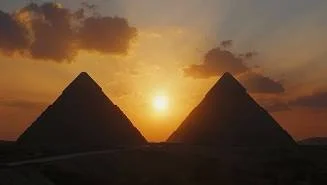
Khufu and Khafre pyramids
The summer solstice sunset between the Giza pyramids representing the ancient Egyptian calendar concept
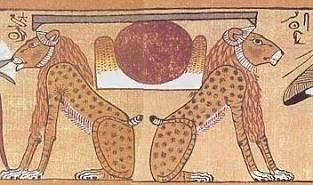
Hieroglyphic for the horizon guarded by Aker. The symbol features the sun disc resting in the notch between two mountain peaks (the mountains of Manu and Bakhu). This represents the horizon where the sun is reborn each morning. The Aker Lions: In Egyptian mythology, the horizon icon is often guarded by Aker, a double-headed lion deity representing "Yesterday" and "Tomorrow," protecting the sun as it passes through the underworld
By placing the Great Sphinx in the foreground to act as the mythical double-headed lion guardian of the horizon, the ancient architects transformed the entire Giza plateau into a landscape-sized spell of rebirth. This intentional cosmic alignment anchored these grand monuments directly to the cycle of solar cosmic renewal and the onset of the life-giving Nile flood.
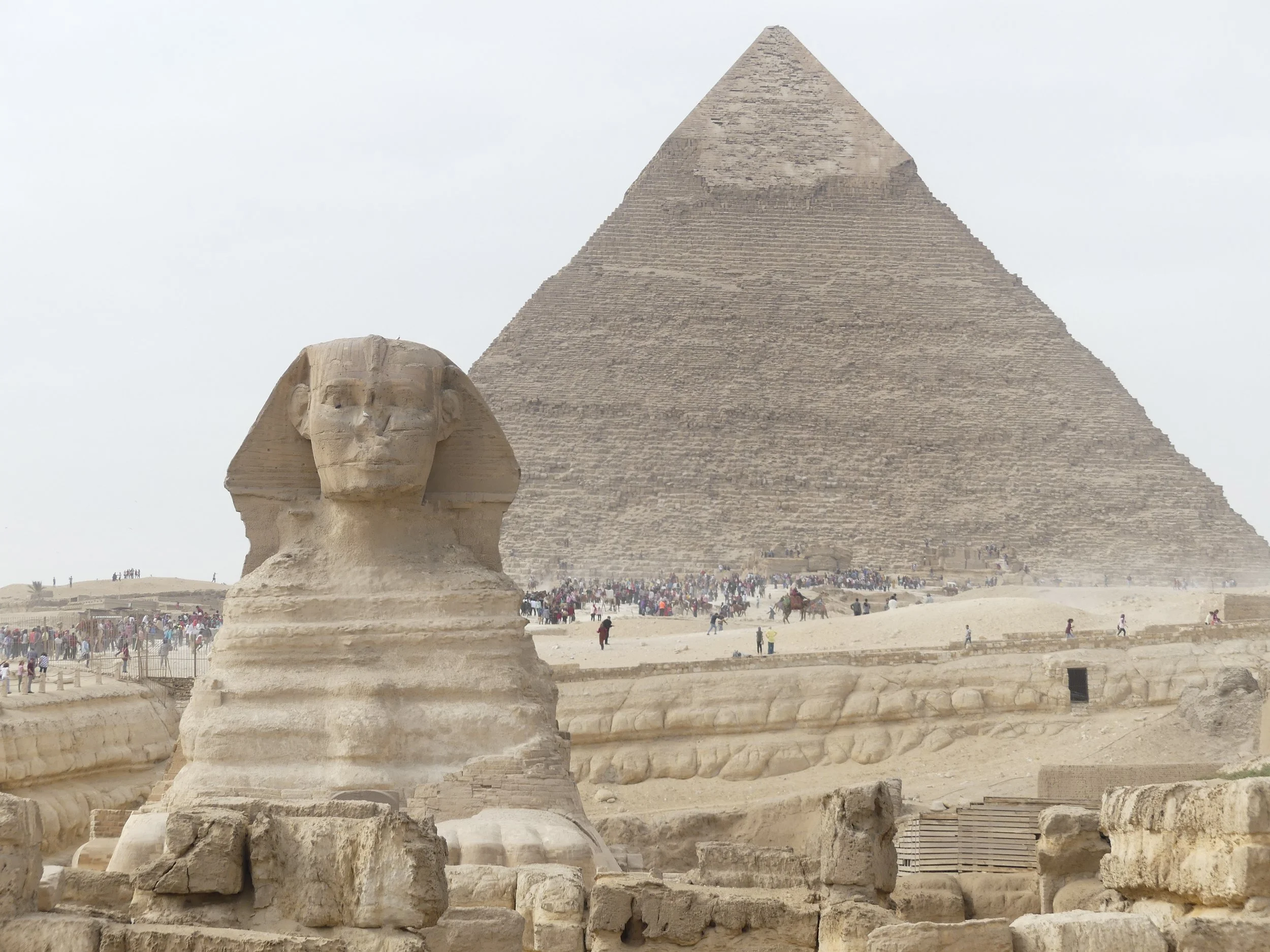
The Sphinx in the Giza Platau
Akhet Season: The Swelling of the Waters
The Summer Solstice was intrinsically bound to the natural rhythm of the land through the Akhet season, which translated directly to "Inundation." Lasting four months from mid-summer to mid-autumn, this was a period when Egypt’s landscape completely dissolved into a vast network of inland lakes. The Nile River would breach its banks, drowning the scorched desert soil under a layer of rich, black volcanic silt. Because the agricultural fields were completely submerged, everyday farming came to a halt. Instead of tending crops, the country’s workforce was mobilized by royal decree to build the very temples that tracked the skies. This seasonal flood was the lifeblood of the civilization; a strong inundation meant prosperity, while a weak one spelled catastrophic famine.
The New Year in ancient Egypt began on the Summer Solstice, with the celebration of the birth of Ra, the sun god, and the renewal of the Pharaoh as the manifestation of Ra on earth. Wept Renpet was a fundamental ritual celebration of the birthday of the King as the embodiment of the Divine on earth, with the scope to ensure a prosperous year for the land and the people of Egypt.
With the rising of the star Sirius/Sopdet, the New Year marked the season of the inundation that transformed Egypt's landscape into a massive network of lakes, with cities and pyramids rising like islands out of the floodwater.
Wepet Renpet and the Night of Divine Drunkenness
To bridge the terrifying gap between the old year and the new, the Egyptians celebrated Wepet Renpet, the New Year, with Egyptian New Year rituals designed to pacify the cosmic forces of destruction. Central to this was the raucous Feast of Drunkenness, rooted in the myth of the lioness goddess Sekhmet. Legend held that the sun god Ra sent Sekhmet to punish a humanity that disrespected him and the Natural Order and Balance of Ma’at. To stop her bloodlust that got out of control, the earth was flooded with beer dyed crimson to look like blood. She drank it, grew intoxicated, and transformed into a gentle and compassionate protector. To honor this salvation, citizens and priests gathered at temples to drink red pomegranate beer and engage in music and ceremonial dancing to ensure the goddess remained peaceful for the coming year.
Egyptian New Year Rituals: Recharging the Divine
While the public celebrated in the streets, the high priests and the Pharaoh engaged in secretive, high-stakes magic to secure the empire's survival.
At temples like Dendera and Edfu, priests processed up to the flat, open roofs carrying the sacred statues of the gods to be exposed to the fierce rays of the solstice sun. The Egyptians believed this ritual directly "recharged" and regenerated the divine soul of the deity.
Meanwhile, along the banks of the rising river, the Pharaoh would cast a sealed papyrus scroll into the churning waters—a literal divine command ordering the Nile god Hapi to flood to the exact, correct level needed to sustain the crops.
Because the Pharaoh walked alongside or immediately behind the sacred barks (carrying the hidden statues of the gods), his physical presence linked him directly to the divine realm. Seeing the king leading the gods out of the darkness of the inner sanctuaries and into the blinding light of the sun visually proved to the masses that he was the supreme, chosen intermediary.
Through these grand ceremonies the ancients harmonized their civilization with the cosmos, turning the anxiety of a changing season into an eternal promise of renewal.
Bibliography
Belmonte, Juan Antonio, and Mosalam Shaltout. 2009. In Search of Cosmic Order: Selected Essays on Egyptian Archaeoastronomy. Cairo: Supreme Council of Antiquities Press.
Bryan, Betsy M. 2020. "The Altered State of Religion: Sekhmet and Ritual Revelries in the New Kingdom." Lecture Paper, Cairo: American Research Center in Egypt (ARCE).
Egypt Tours Portal. 2025. "Ancient Egyptian Festivals: Divine Rituals and Seasons." Egypt Tours Portal Publications. egypttoursportal.co.uk. [1]
Ellis, Normandi, 1999, Feasts of Light, Celebrations for the Seasons of Life based on the Egyptian Goddess Mysteries. Quest Books
Spalinger, Anthony. 1992. Three Studies on Egyptian Feasts and their Chronological Implications. Baltimore: Halgo.
The Collector. 2023. "The Opet Festival: Celebrating the Pharaoh's Divine Right." The Collector History Magazine. thecollector.com.
Wilkinson, Richard H. 2000. The Complete Temples of Ancient Egypt. London: Thames & Hudson.
Wilkinson, Richard H. 2003. The Complete Gods and Goddesses of Ancient Egypt. London: Thames & Hudson.